By Sarah Mukeku
A trust is a powerful legal arrangement where a person or organisation transfers assets to another party to hold and manage for the benefit of certain people or for a specific purpose. Trusts are popular because they offer flexibility, help protect assets, and make it easier to preserve wealth across generations.
Trusts are commonly used for:
- Succession and estate planning
- Asset protection
- Wealth management
- Charitable and philanthropic purposes
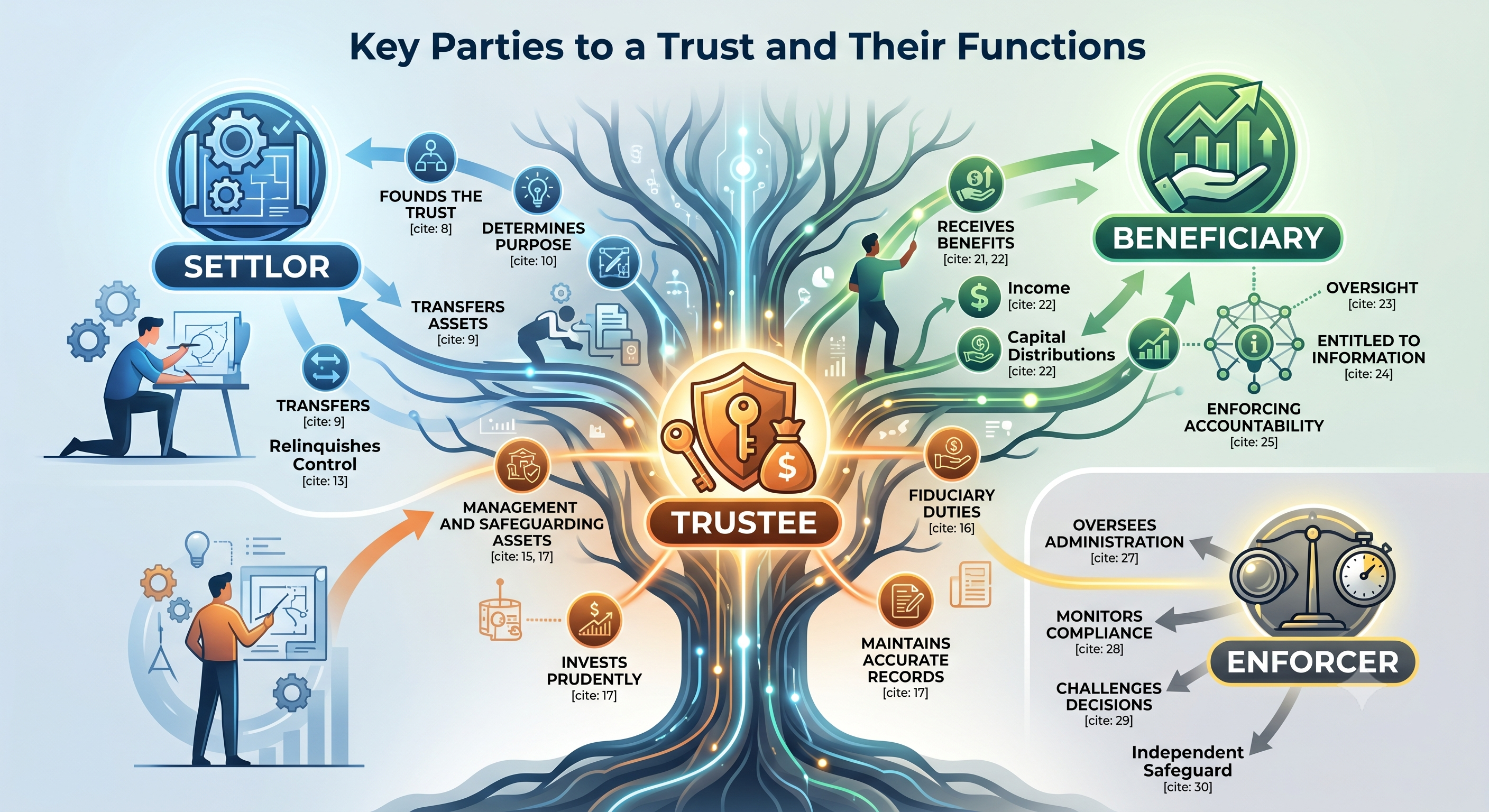
For a trust to work effectively, several key parties must play their roles properly. Each person involved has specific responsibilities that help ensure the trust operates as intended and achieves its objectives.
The main parties to a trust are the settlor, trustee, beneficiary, and, in some cases, an enforcer.
1. The Settlor: The Person Who Creates the Trust
The settlor is the person or organisation that creates the trust. They decide why the trust is being established and how it should operate.
Key Responsibilities of a Settlor
Creating the Trust
The settlor creates the trust by transferring assets into it. These assets may include money, land, shares, investments, or other valuable property.
Setting the Rules
The settlor decides how the trust assets should be managed and how the benefits should be distributed.
Designing the Trust Structure
The settlor chooses the beneficiaries, appoints the trustees, and sets out the powers, responsibilities, and objectives that will guide the trust.
These instructions are usually written in a legal document known as a Trust Deed, which serves as the main document governing the trust.
Once the trust has been properly established and the assets have been transferred into it, the settlor generally gives up direct control over those assets. From that point on, the trustees are responsible for managing the trust according to its terms.
2. The Trustee: The Person Responsible for Managing the Trust
A trustee is the person or organisation responsible for managing the trust assets on behalf of the beneficiaries. Trustees have a legal duty to act in the best interests of the trust and the beneficiaries at all times.
This means trustees must not use trust assets for their own benefit or allow personal interests to influence their decisions.
Key Responsibilities of a Trustee
Protecting Trust Assets
Trustees must ensure that the trust property is kept safe and properly managed.
Keeping Proper Records
They must maintain accurate financial and administrative records relating to the trust.
Managing Investments Carefully
Where trust assets are invested, trustees must make sensible and informed decisions that protect and grow the assets where appropriate.
Making Distributions
Trustees are responsible for distributing income, capital, or other benefits to beneficiaries as required by the trust deed.
Acting with Care and Skill
Trustees must exercise reasonable care, diligence, and skill when making decisions about trust assets.
Avoiding Conflicts of Interest
Trustees must avoid situations where their personal interests conflict with their duties to the trust and its beneficiaries.
3. The Beneficiary: The Person Who Benefits from the Trust
A beneficiary is the person, group of people, or organisation that the trust is intended to benefit. Beneficiaries are entitled to receive benefits from the trust according to the terms set out in the trust deed.
Rights and Roles of a Beneficiary
Receiving Benefits
Depending on the type of trust, beneficiaries may receive income, property, capital distributions, or other benefits provided for under the trust deed.
Monitoring the Trust
Beneficiaries are usually entitled to receive information about how the trust is being managed. This helps them understand whether the trust is being administered properly.
Holding Trustees Accountable
If trustees fail to carry out their duties or act improperly, beneficiaries may have the right to seek legal remedies. This makes beneficiaries an important part of the trust’s accountability system, helping ensure that trustees fulfil their obligations.
4. The Enforcer: An Independent Oversight Role
Some trust structures include an enforcer. An enforcer is appointed to help ensure that the trust is managed according to its purpose and that the trustees comply with the terms of the trust.
The enforcer acts as an independent safeguard, helping protect the settlor’s intentions and ensuring the trust continues to operate as intended.
Powers and Responsibilities of an Enforcer
If trustees fail to perform their duties properly or act against the purpose of the trust, the enforcer may:
- Request information and reports from the trustees
- Question or challenge trustee decisions
- Take legal action where necessary to ensure compliance with the trust terms
By providing independent oversight, the enforcer helps ensure that the trust remains focused on its objectives and is administered correctly.
Why Understanding the Parties to a Trust Matters
A trust works best when each party understands and performs their role effectively:
- The Settlor creates the trust and decides its purpose.
- The Trustee manages and protects the trust assets.
- The Beneficiary receives the benefits of the trust and helps ensure accountability.
- The Enforcer (where applicable) provides oversight and helps ensure the trust’s objectives are achieved.
Understanding the roles of the parties to a trust is important for anyone considering setting up a trust or becoming involved in one. Knowing how each party contributes to the trust’s operation can help ensure effective trust administration, protect beneficiaries’ interests, and support the long-term success of the trust.
If you need assistance with setting up a trust, trust administration, succession planning, or asset protection, contact us at info@masibolaw.co.ke.
Leave a Reply